What Every Woman Needs To Know About Prolapse

Prolapse is one of those topics women search in private tabs late at night, trying to make sense of sensations they have never felt before.
It is the quiet fear no one prepares you for but somehow expects you to navigate alone.
Most women walk around for months noticing little things that feel off but not “bad enough” to talk about.
The end-of-day heaviness.
The pressure after standing too long.
The weird bulging feeling when they wipe.
The urge to pee again even though they just went.
These aren’t random…they’re signals.
And because society rarely talks about prolapse unless it involves extreme surgery stories, women are left trying to convince themselves that it’s just aging, postpartum hormones, stress, or “part of being a woman.”
But the reality is, your body is not collapsing.
It’s communicating.
And once you understand what those signals mean, the fear starts to fade. Everything begins to make more sense and you realize you have far more control than you’ve been led to believe.
So What Exactly Is Prolapse
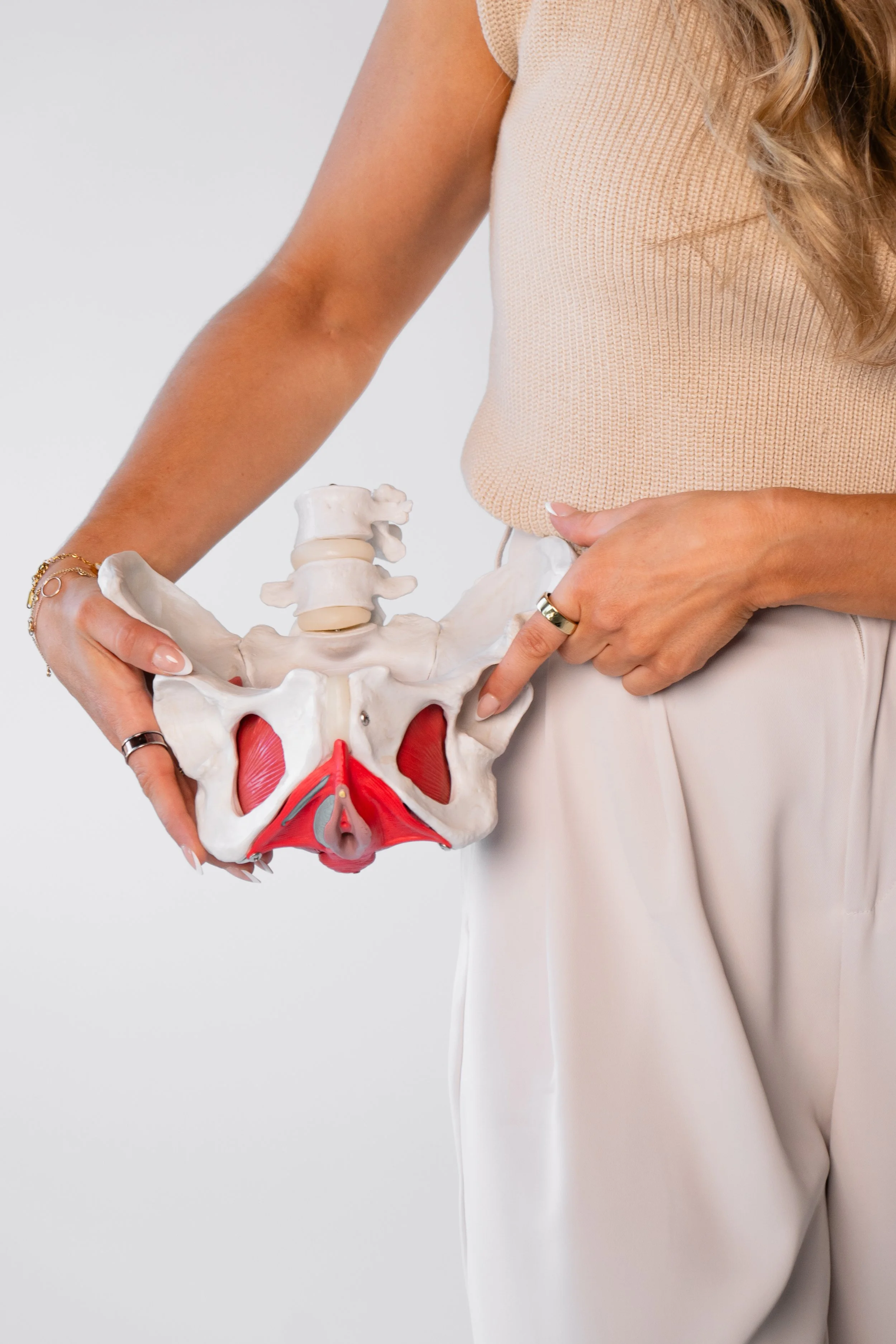
Prolapse happens when the muscles and connective tissue inside the pelvis stop giving your organs the support they need. The bladder, uterus, or rectum begin shifting downward into the vaginal space.
It sounds dramatic and feels alarming.
But it is much more common than you think.
And it develops gradually, not overnight. Pregnancy, childbirth, chronic constipation, long-term coughing, hormonal changes, poor breathing mechanics, high stress, and years of pressure on the pelvic floor all contribute.
Your body didn’t “fail.” It adapted. And now it needs support.
The Symptoms Are Clear When You Know What To Look For
Most women think prolapse just means a visible bulge.
Sometimes that happens, but often it doesn’t.
Here are the symptoms that tend to show up first:
A heavy or dragging sensation in the pelvis
End-of-day pressure that disappears after lying down
Leaking when laughing, sneezing, or jumping
Difficulty emptying your bladder fully
Constipation or needing to “push” to pass stool
Pain that feels like it lives in the hips, pelvis, or lower back
Changes during intimacy
A feeling that something is “lower” than it used to be
Symptoms come and go. Some days feel fine, and other days feel impossible.
That fluctuation is normal.
Prolapse Is Dynamic, Which Means It Can Improve
This is the part women never hear from traditional providers.
Prolapse isn’t a static condition.
It changes throughout the day based on posture, breath, inflammation, stress, bowel habits, lifting patterns, activity level, and even your cycle.
That means symptoms can get better and often they do when the right pieces are addressed.
Your body wants to be supported…you just need the roadmap.
Why Does This Happen To So Many Women
Because the pelvic floor is responsible for far more than bladder control, it responds to how you breathe, how you move, how you lift, how you manage stress, and how you hold tension in your body.
It is impacted by:
• Pregnancy and childbirth
• Chronic straining
• High stress and a clenched nervous system
• Hormonal shifts
• Poor core coordination
• Weak hips and glutes
• Heavy lifting with poor pressure management
• Years of “pushing through” discomfort
Your pelvic floor is not fragile. It has simply been overloaded.
Watch This If You Feel Overwhelmed
Prolapse can feel confusing when you don’t understand it. But once you do, the fear quiets.
This video will help you get there.
In this conversation, I break down what prolapse really is, how it shows up, what actually helps, and why many women improve without ever stepping into a surgical office.
You will feel calmer, clearer, and more empowered by the end.
👇 Press play below!
In this video, I explain the signs your pelvic floor is asking for help and what to do before things get worse.
What To Do When You Suspect Prolapse
You do not need to panic and you do not need a complicated plan.
These first steps alone can dramatically change how your body feels.
One: Stop Straining
In the bathroom. At the gym. During daily tasks. Use your breath to support your core and pelvic floor, not force them.
Two: Fix Constipation Immediately
This alone changes symptoms fast.
Hydrate. Add fiber. Relax on the toilet. Stop pushing.
Smooth bowels = less pressure on your pelvic floor.
Three: Retrain Your Breath
Most women have no idea their breath is contributing to prolapse. Your diaphragm and pelvic floor are a team.
If one is tight, the other compensates.
Practice slow belly breathing. Try to feel your ribs expand. Let your pelvic floor soften on inhale. Let it respond naturally.
Four: Build Strength the Right Way
Strength heals prolapse when it is done intentionally.
This means coordinated core work, hip and glute strengthening, and learning how to lift without pushing pressure downward.
This is where the magic happens.
Five: Get a Pelvic Floor Assessment
A professional evaluation takes the fear out of guessing. It tells you what organs are involved, how much support you’ve lost, and what type of rehab will give you the fastest improvement.
Knowledge removes fear, and direction creates progress.
If You Want Support, Here’s Your Next Step
At Three Sixty Wellness, we look at the entire picture
Your pelvic floor
Your breath
Your core
Your nervous system
Your strength
Your movement patterns
Your hormones
Your daily habits
Because that is how you create lasting change, not short-term relief.
If you want a team that listens, explains, and builds a plan that fits your life, you can book a free call with us.
We will walk you through what is actually going on and what you can do to start feeling better immediately.
You deserve a body that feels supported, steady, and strong.
And that is absolutely possible.